




Slicing up ships and planes: A new way to invest
How a Bahraini startup is making million-dollar assets accessible to smaller investors

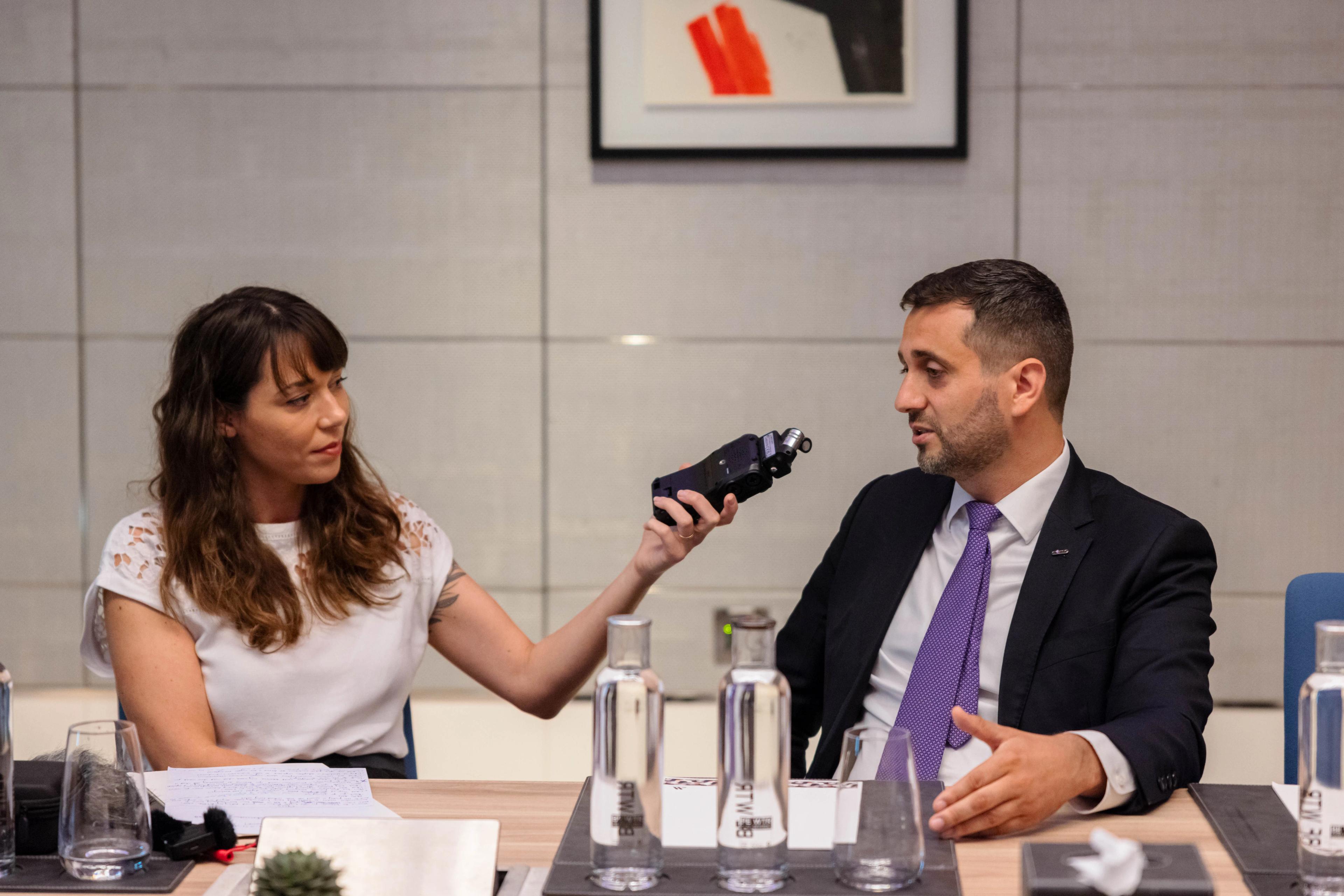
Imagine owning a stake in a cargo aircraft—once a privilege reserved for multimillion-dollar investors—now accessible with as little as $100,000. Thanks to a Bahraini company, blockchain technology is transforming alternative investments, making them more inclusive and secure.
In a recent interview with The Crypto Radio, Alex Lola, CEO of Assets Tokenization Middle East (ATME), shared his vision for breaking down barriers to high-value investments. His company is leading the way in tokenizing large assets like aircraft and shipping vessels, turning them into smaller, tradeable digital tokens.
This process, called tokenization, converts ownership rights to an asset into digital tokens stored securely on a blockchain. It’s similar to owning a stock in a company but capable of representing almost any type of asset.
What is tokenization?
Tokenization might sound complex, but it’s a straightforward concept: dividing a large, valuable asset into smaller, shareable pieces. Each piece is represented by a digital token stored on a blockchain—a type of secure digital ledger that ensures transparency and prevents fraud.
ATME differentiates itself from many crypto platforms by prioritizing regulation and security. The company uses Hyperledger Fabric, a private blockchain designed for businesses, rather than public blockchain networks. This ensures stricter controls, making investors feel confident about the legal validity of their tokens.
"We're actually a Bahraini-based company. We're licensed by the Central Bank of Bahrain as a crypto exchange, although we prefer to call ourselves a digital assets exchange," said Lola.
He also emphasized the importance of regulatory compliance: "Unlike tokens issued in public blockchain in an unregulated environment, the token issued in a regulated platform, you can actually present it to the court, and it proves your claim of ownership on the asset. That's what's very important for any investor."
Aircraft, real estate, and more
ATME’s first major project involves tokenizing cargo aircraft. These planes are leased to businesses, generating steady returns for investors.
"Imagine we tokenize an aircraft. It's cargo aircraft. So it's a leasing business. So again, it's a very good opportunity for investors to invest in such alternative asset classes and aircraft with a very good, very good return," explained Lola.
Beyond aircraft, ATME is also working on tokenizing metals, real estate, data centers for Bitcoin mining, and cargo ships. By offering such diverse options, the company aims to open up alternative investments to more people, enabling participation in asset classes that were previously out of reach.
Connecting global markets
ATME has established itself as a licensed digital assets exchange under the Central Bank of Bahrain. However, its ambitions extend beyond the Middle East. The company plans to expand into Asia and Europe, creating a global network where investors and businesses can connect.
"The idea is to connect these three regions - Europe, GCC, and Asia - and allow investors and companies looking for risk capital to interact with each other with no borders," Lola said.
With the global market for tokenized assets projected to reach $2 trillion by 2030, Lola sees blockchain technology as a way to enhance market efficiency rather than create something entirely new.
"Blockchain, as a technology, enables new segments to enter the products which previously used to be accessible only by, let's say, privileged users," he said.
"All in a nutshell, it's all the same. It's nothing new. It's still the same aircraft which is delivering goods, same metals, same real estate. So just by leveraging this technology, we increase capital markets efficiency."
ATME’s hybrid approach—blending cutting-edge technology with the stability of traditional finance—sets it apart. By focusing on regulated platforms, tangible assets, and investor protection, the company is making high-value investments more accessible and inclusive. As blockchain continues to evolve, it’s reshaping not just how we invest but who gets to participate.