




Why are we sending metal discs into space?
'We have a way to preserve humanity's information in the solar system on different planets, in case something were to happen to us'

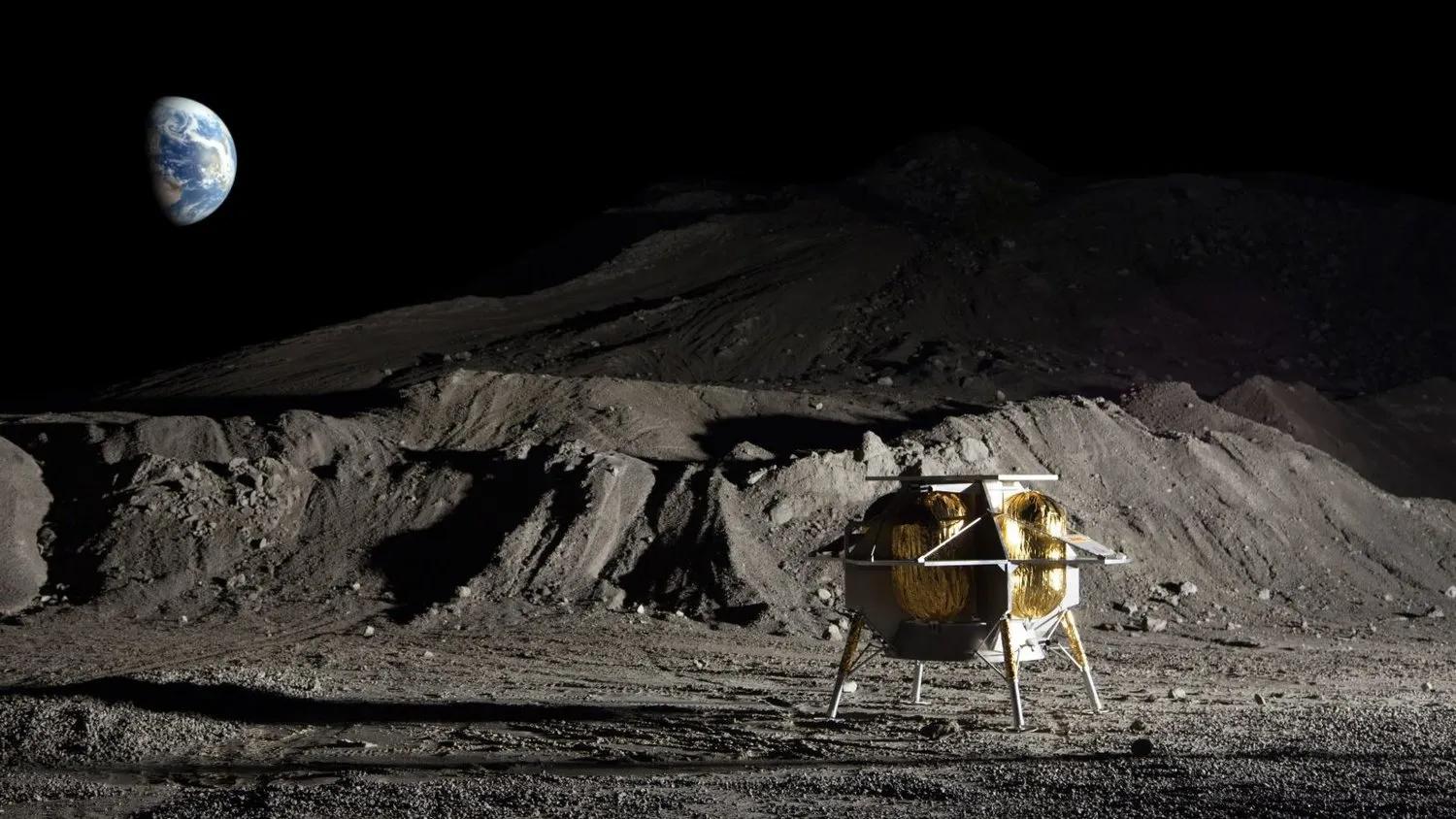
Arch Mission Foundation wants to preserve humanity’s knowledge by storing it on the Moon, in space and dormant volcanoes.
Call it out of this world or a moonshot but there is a serious side to the work of the foundation. It has been sending our human knowledge, stored on metal discs, to the Moon and throughout the solar system.
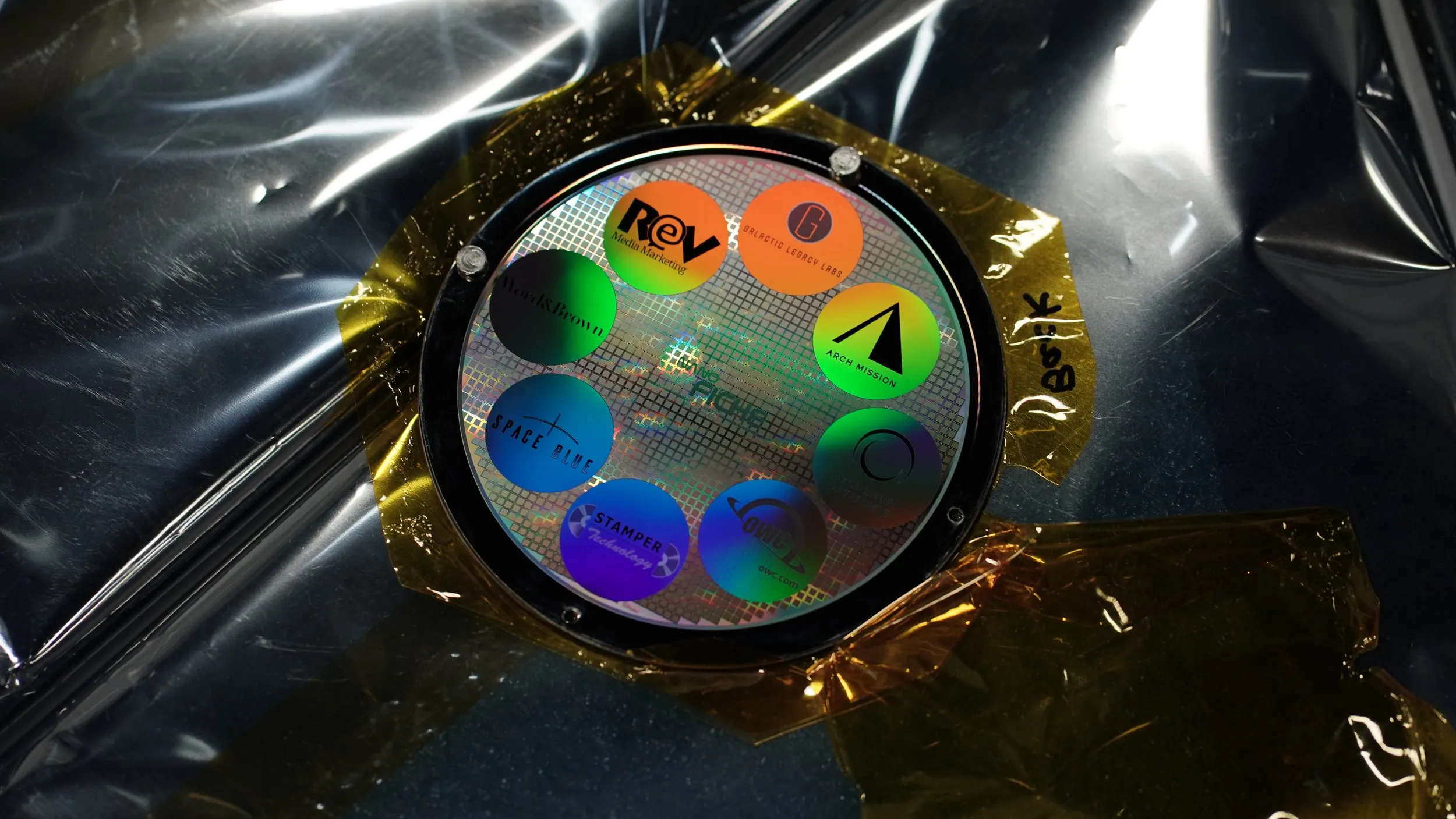
It is the idea of futurist Nova Spivack, who wants to preserve our knowledge and culture should we no longer be able to live on earth. Arch Mission, a non-profit organisation, has already etched millions of pages of information onto durable nickel and quartz crystal discs and sent them into space.
These discs are a backup of life on earth that can withstand extreme temperatures, radiation, and the ravages of time for billions of years.
Lanette Phillips is part of the Arch Mission Foundation and is a trailblazer herself. She has produced hundreds of music videos for the likes of Eminem, Beyonce and Rihanna before turning her attention to a different kind of star.
Speaking to The Crypto Radio, the music producer said: "The majority of our information is on plastic, paper, digital tape—we know how we've been storing it for years.
"This way we have a way to preserve humanity's information in the solar system on different planets, in case something were to happen to us."
Orbiting the sun
Closer to home, discs have been placed in dormant volcanos, as well as underground bunkers, and various places around the earth for discovery.
The idea for Arch Mission was sparked during a meeting with Spivack, and became reality thanks to a collaboration with Elon Musk's SpaceX. Discs containing the world's knowledge were placed in the glove compartment of a Tesla Roadster that is now orbiting the Sun.
"When I saw these little discs, containing millions and millions of pages of basic knowledge and backup, it was something that I could not resist getting involved in," Phillips added.
The discs contain a curated selection of information, including the Rosetta Project's 5,000 languages, the English Wikipedi, Project Gutenberg, corporate logos, cultural artifacts, and more.
Rather than creating new content, Arch Mission is focused on preserving what has already been meticulously compiled. All the content is known as the “Lunar Libraries”.
"We're not curating or censoring. We're taking already curated information. For instance, we had one library which gave us 30,000 books.”
Some very big names in the music industry have also donated their work to be preserved in space.
"Our aim was the south region of the Moon. That's such a special place that constantly has sunlight and it has fossil atoms of hydrogen and water ice, which means there's fuel and there's solar.
“So if we get up there and we start building and putting artifacts on that region of the Moon, we can actually build other spaceships to go further into space from there."
While the first few missions have faced setbacks, with some discs lost in failed landings, the team remains undeterred. They see each unsuccessful attempt as a learning experience, and are committed to continuing their efforts.
"The next one for us is going to be Mars. So we're probably going to have many unsuccessful missions before we actually have the one that lands, which is the reason why we do quite a few backups of the same discs.”
NFTs and crypto

You may be wondering how this all fits in with crypto and the blockchain. Phillips first caught our eye when she was a speaker at the Future Blockchain Summit, a global technology conference.
As the director of impact and partnerships, she explained how the Arch Mission is using non-fungible tokens (NFTs) as a way of getting content creators, musicians and organisations onboard.
Beyond the practical benefits of preserving knowledge, Arch Mission also sees an opportunity to engage artists and the public in their endeavor.
The organization has curated the work of hundreds of artists, who will be able to mint NFTs of their lunar-bound creations.
While space travel remains limited, the Arch Mission team is hopeful that as their successful missions accumulate, more people will become excited about the prospect of having their own contributions preserved for millennia.