




Farida Nabourema and Africa's quiet financial shift
'Right now, Bitcoin works better than my national currency,' she says, after using it to support family and activists in exile

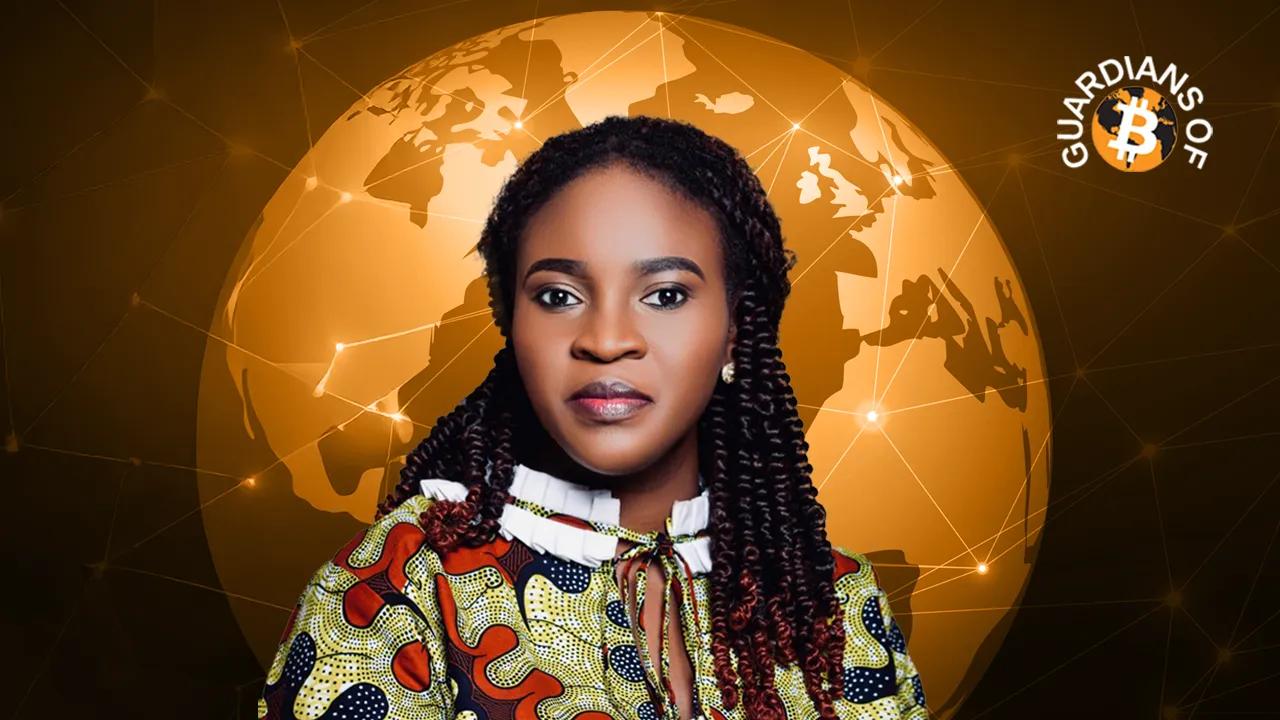
Every month, Farida Nabourema sends money home to her father in Togo. It arrives on his phone as local mobile money. He does not know how it gets there.
“And funnily enough, he doesn't know I send him Bitcoin,” Farida Nabourema told Guardians of Bitcoin. “The tools that I use allow him to access the money via mobile money in our country, so he doesn't know what infrastructure I use to do that.”
For Nabourema, a Togolese activist, writer, and founder of the Africa Bitcoin Conference, this is not a novelty. It is part of how she continues to support family members and activists under a government that monitors transfers, shutters bank accounts, and arrests people for carrying cash.
Organizing under surveillance
Nabourema’s journey with Bitcoin began around nine years ago during her activism in Togo, which she described as being ruled by “the oldest autocracy on the African continent.”
“I’ve been working to put an end to dictatorship in my country,” she said. “We have faced a lot of repression and surveillance from our government, and many of us have had to flee and live in exile.”
“It became almost impossible to send money through the traditional routes like bank transfer or remittances such as Western Union,” Nabourema said. “Bitcoin became an alternative.”
The situation intensified recently in 2025. “It has been really crazy,” she said. “Over 120 people arrested [with months]. Many have disappeared. Many activists have had to flee their homes.”
“Some people did not even take part in the current rounds of protests, but they were still arrested in what the government calls preventive arrest,” she said. “They just suspect you could potentially do something.”
“The political tensions in our country… has caused a crisis,” she said. “That crisis put us in a situation where we have to relocate our people.”
“When their bank accounts are shut, they can no longer bank,” she said. “But with Bitcoin, activists have a safety net.”

In Togo, mobile money often serves as the final step for funds sent through Bitcoin-based rails used by families and activists. Photo: Unsplash / Gnim Zabdiel Mignake
Infrastructure, not ideology
Nabourema first encountered Bitcoin as a practical solution. “Initially, it was more about the tool,” she said. “But then eventually I got to really understand the philosophical meaning of it.”
Her father once hid money in books. “My dad would just tell me the name of some books,” she said. “These are the books in which he hides money for us.”
“That was more than 20 years ago,” she said. “Things have evolved.”
Across Africa, she says, Bitcoin often functions invisibly. “A lot of people using Bitcoin in Africa don't even know they're using Bitcoin,” she said. “For them it's just digital money.”
For older generations, simplicity matters more than explanation. “For those who even struggle with basic technology, you don't want to go too much into the jargon,” she said.
“It's like literally teaching somebody how to use a phone without explaining how the electricity and the Internet contribute to making their phone being powered.”
Money, power, and Togo’s economy
Nabourema links modern financial pressure in Togo to colonial-era monetary systems.
“We never had local currency,” she said. “The French government created the CFA in 1946 right after World War Two.”
“The French government needed to consolidate the gold,” she said, “so that they can be politically relevant.”
“The first president of my country was assassinated exactly a month after the Togolese franc was voted by Parliament,” she added.
Cut to the current day and the situation has not improved. “Our currency being pegged to the euro actually made our currency lose a lot of its value already,” she said.
“This has some extreme consequences on our economy,” she said. “Our governments are no longer building schools, they're not building hospitals, they're not building universities.”
“Without money, you cannot fight. You cannot fight for your freedom. It is almost impossible,” she said.

Long-running debt and currency pressures have reduced public investment in schools and universities across Togo, Farida Nabourema said. Photo: Unsplash / Emmanuel Appiah
Building the missing space
After attending major Bitcoin conferences in the United States, Nabourema noticed how little Africa was represented. “We didn't even have 2% of the speakers that were African,” she said.
She launched the Africa Bitcoin Conference in 2022. At the time, fewer than five Bitcoin education or community projects existed on the continent. Today, there are more than 130.
“More than two thirds of the projects that are on the continent today are being led by people who attended this conference,” she said.
Locations are selected deliberately. “We tend to hold our conference in countries that we see as democratically safe,” she said.
She also credits early support. “The Human Rights Foundation has been one of our very first sponsors,” she said.
“I didn't come into the Bitcoin space because I want to hold and become rich,” Nabourema said. “I just wanted solutions that can make things better for my people.”
Beyond the annual conference, Nabourema is also involved in Africa Bitcoin Day – a decentralized, continent-wide commemoration scheduled for May 2026. The initiative brings together local Bitcoin communities to host meet-ups, workshops, and outreach programs aimed at grassroots education and adoption.
Previous editions have involved communities across more than 13 African countries, including Togo, Nigeria, Kenya, Ghana, Cameroon, Benin, Mali, and the Democratic Republic of Congo.
Who gets to build the infrastructure
Despite the growth of grassroots projects across the continent, Nabourema said the foundations are still fragile.
“We need more African developers to be working on Bitcoin. We don't have enough,” she said.
She is equally blunt about the gender imbalance. Fewer than five percent of Bitcoin companies in Africa are run by women – “that is a tragedy,” she said – despite women forming the majority of the continent’s workforce.
Language also shapes who gets to participate.
“There's more happening in countries that are English speaking than they are in countries that are non English speaking,” she said.
For Nabourema, building lasting change is not about short-term wins, but generational effort.
“In my country, these regimes are heavily militarized,” she said. “But even under massive repression, when people are determined, they can get power back.”
The work, she added, is slow and cumulative. “But it takes a long time, a lot of education, a lot of organizing, and it takes generations.”

Farida Nabourema said fewer than five percent of African Bitcoin companies are run by women, despite women forming most of the workforce. Photo: Unsplash / Desola Lanre Ologun
Creating freedom before permission
Nabourema does not frame Bitcoin as a substitute for political struggle.
“Bitcoin doesn't need for us to wait till we reclaim political power before we can attain financial freedom,” she said. “We can start attaining that financial freedom on the sideline.”
Her message to young Africans is simple: “When you want something and it's not there, then you create it.”
“Bitcoin means freedom,” she told Guardians of Bitcoin. And across the continent, that freedom is already moving – quietly – through the same infrastructure that keeps families supported, activists protected, and communities alive.