




Sebastien Vaillant: Why Ledger targets the Gulf
'We see the Middle East as a catalyst for growth,' says ledgeras digital identity and wallet rails develop

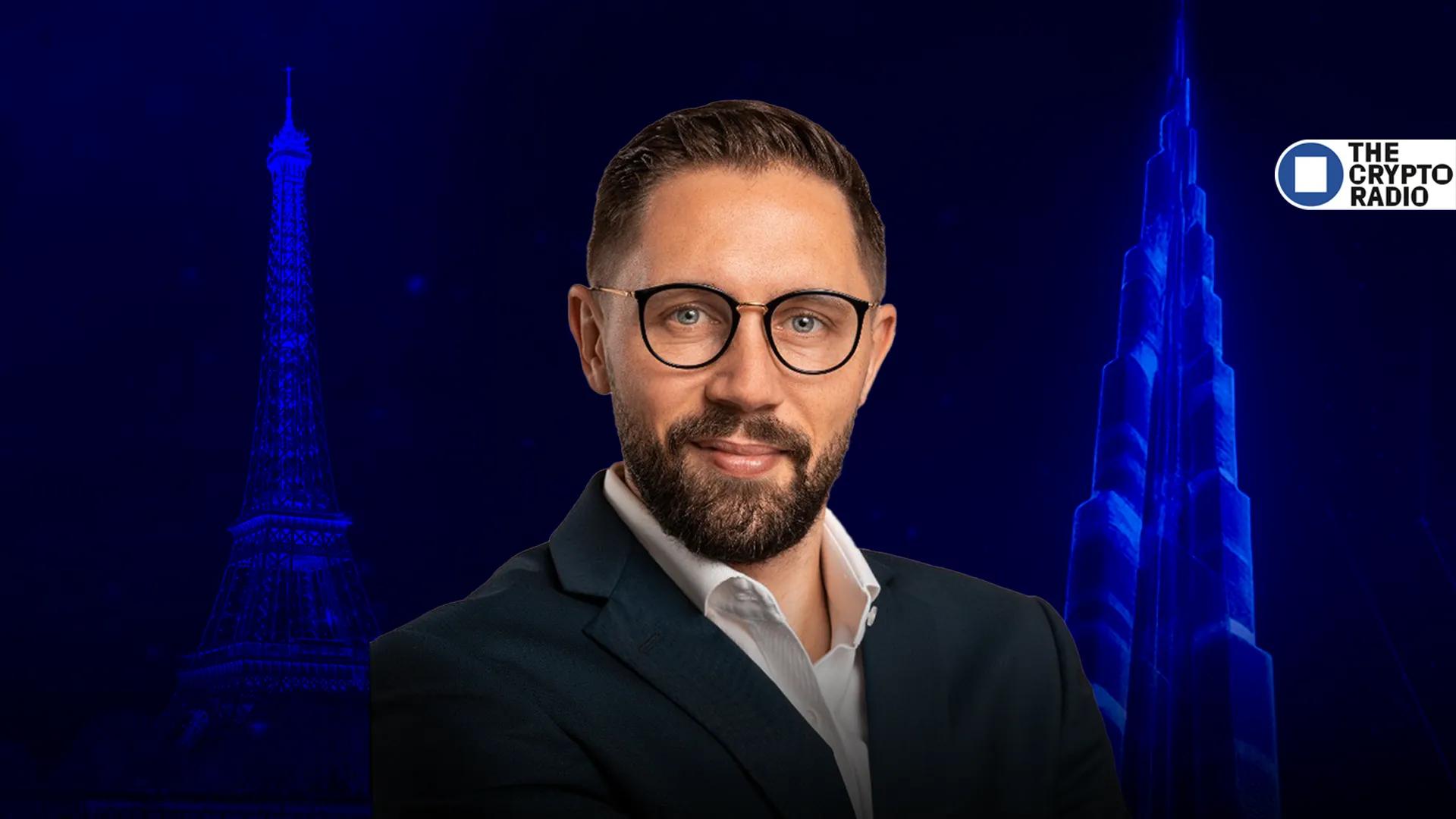
“Blockchain and crypto technology is just 16 years old. It is like a baby in diapers that is trying to start to walk,” Sebastien Vaillant, Regional Lead for Ledger Enterprise in the Middle East and Africa, told The Crypto Radio.
His analogy lands because it reflects a contradiction that millions already live with. The technology may still be learning to walk, but people are already trusting it with their savings, salaries, and financial futures – often through phones, laptops, and public WiFi networks that leave their money exposed to real-world risks.
“If you’re using a computer, a phone, anything that is connected to the internet, it’s very vulnerable. You connect to public WiFi, so I can easily get access to your keys and basically move the money around,” he said.
Vaillant leads enterprise solutions at Ledger, one of the world’s largest digital asset security firms. Based in Dubai, he is now responsible for building infrastructure that allows both individuals and institutions to take control of their digital assets without exposing them to everyday vulnerabilities.
From Paris to Dubai
Vaillant began his career in traditional finance before moving into blockchain and digital assets. He graduated from business school in France in 2012 and started his career in fintech, working with asset managers, brokers, and wealth managers before moving to Dubai in 2015.
In Dubai, Vaillant joined global fintech firm FIS, working with institutional clients including sovereign wealth funds and asset managers. He later moved to MasterCard, where he led CipherTrace – one of the earliest blockchain tracing platforms.
“CipherTrace was the OG tracing tool in the blockchain,” he said, explaining that the work brought him into direct collaboration with law enforcement and governments to track fraud and criminal activity.
That experience reshaped his understanding of blockchain’s real-world impact. “I want to do good in the world,” he said. "When I was with MasterCard and CipherTrace, I was lucky enough to have close relationships with law enforcement, with governments to help the tracing of funds, because they were using it for criminal activity.”
“For me, the biggest aha moment was when I realized that because of my position within the companies I was working for, and the blockchain as well, that opens a lot of opportunities for you to do good.”
Five months before speaking to The Crypto Radio, Vaillant joined Ledger as the first person in the Middle East to lead its enterprise solutions.
He now focuses on expanding Ledger’s institutional footprint across the region while advocating for education, best practices, and secure self-custody – themes that connect directly to his long-standing interest in personal finance, financial inclusion, and long-term investment.
Self-custody – with responsibilities
Moving into crypto means becoming your own bank – and that shift comes with responsibility.
“We are all used to the banking ecosystem where somebody else is holding our money," Vaillant said. "Now what you’re basically doing is taking ownership of this and becoming your own bank.”
He believes education remains Ledger’s biggest priority. “There are key differences between web2 and web3. Owning your keys comes with a set of responsibilities and best practices,” he said.
“What are the best practices? What should we or should we not do with this?” he posited.
Ledger supports this learning curve through its Ledger Academy and consumer education platforms.
What Ledger builds

Ledger now operates across three core product lines.
The first is its individual hardware wallets, which allow everyday users to store and manage digital assets while keeping private keys offline.
The second is Ledger Enterprise, which serves institutional players.
Institutions require far more than storage. “They need governance rules," Vaillant said. "Who can make transactions? White list addresses. Another layer of compliance and KYC.”
The third pillar is Ledger’s consumer services, including Ledger Live – a wallet application that enables everyday users to manage and interact with digital assets while keeping private keys offline and protected.
Behind the scenes, Ledger also operates a dedicated security division. “We have a team within Ledger called the Donjon. A team of white hackers,” he said. One that keeps itself extra secure: "Nobody within Ledger can access it," he said. "We cannot enter the office."
“The goal is to help the ecosystem so at least your users are not going to face any risk,” said Vaillant.
Stablecoins and tokenization – new financial rails
“Stablecoins have changed quite a lot in the past year itself. This has become part of the payment ecosystem,” Vaillant said, adding that many existing payment rails “are not very efficient.”
In the Gulf, that inefficiency is felt most by workers sending money home.
“Being here in the region, we have an amazing workforce sending money back to their countries. Most of them don’t have access to banking applications,” he said.
“With stablecoins, they can basically cut all of the fees and send more money to their families.”
The same infrastructure is now being applied to real-world assets through tokenization.
“Because today, your art piece will just be on the wall or in the vault. You cannot do anything with it,” he said.
“Using it as a collateral is much more valuable,” Vaillant said, explaining that tokenized assets can be used to access new financial opportunities.
What still needs to be built

The UAE capital is being built as a foundation for digital asset custody, payments, and on-chain finance. Photo: Unsplash / Snapshot 2920
Despite growing adoption, Vaillant said stablecoins are not yet used directly at physical points of sale.
“What’s happening in the background are basically converting your crypto into Fiat so everything you do is in cash, not in stablecoins.”
“To have stablecoins everywhere, we need to build new rails, new point of sales.”
He sees digital identity and wallet infrastructure as the next critical phase. “There is a lot of things now happening about digital identity,” he said.
“You need to provide the infrastructure – the wallets, the security – to be able to transact on a daily basis.”
The UAE, he added, is emerging as a regional catalyst. And he believes the real advantage is time. “Look at it in 10 years," he said. "What can you do to be in a very good place in 10 years’ time?”
As artificial intelligence and blockchain reshape financial systems, he believes early understanding will matter.
Crypto may still be learning to walk – but for those willing to learn now, the foundations are already being laid.